
So many of us carry heavy emotions — grief, anger, disappointment, stress — and we try to push them down or ignore them so we can keep functioning. But over time, those feelings build up, and we end up feeling stuck, tired, or disconnected from ourselves.
That’s why creating space to feel, release, and heal is so important. And the beautiful thing is: nature knows how to hold those feelings for you.
When you’re outdoors — standing by a tree, listening to the wind, watching water flow — it’s as if you’re reminded: nothing stays the same forever. Seasons change. Storms pass. Even the heaviest clouds move on.
In this post, I’ll share three gentle practices we use with clients to invite emotional healing and transformation: Gratitude Altar, Breathing with the Trees, and Listening to the Wind. Each one helps you let go of what no longer serves you, and make space for something new.
Why emotional release matters
Emotions are like water. They’re meant to move and flow. But when we suppress them, they can stagnate, showing up as stress, anxiety, or even physical tension.
Psychologists call this emotional regulation – the ability to feel your emotions fully and let them move through you, rather than getting stuck.
And research shows spending time in nature makes it easier to do just that. Natural settings lower activity in the parts of the brain associated with rumination and overthinking, and increase feelings of peace, hope, and even awe.
These practices give you permission to feel what you feel, and then let it go.
Practice 1: Gratitude Altar
Why it helps:
Gratitude shifts your focus from what’s wrong or missing to what’s already good in your life. Even in hard times, gratitude softens your heart and reminds you of what’s still beautiful and worth holding onto.
How to do it:
Find a quiet outdoor space. It could be a corner of your garden, a favorite park bench, or even a windowsill if you can see trees or sky.
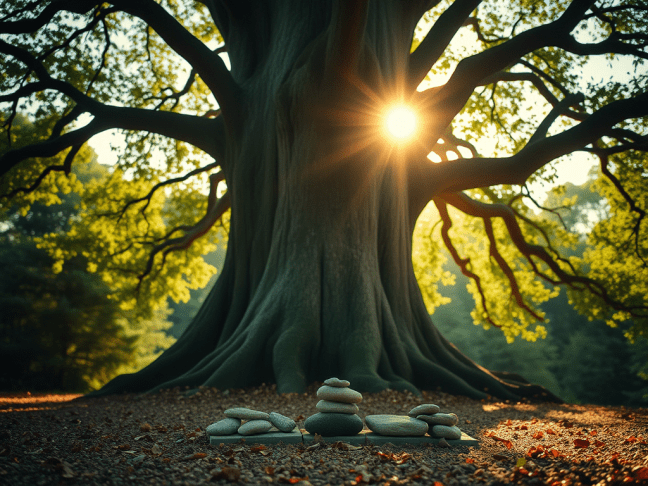
Gather a few natural items that feel meaningful to you — a leaf, a stone, a flower, a pinecone. Arrange them in a small circle or line, like an altar. As you place each item, name one thing you’re grateful for.
Sit quietly with your altar for a few minutes. If you’d like, say a quiet thank-you to the earth, the sky, the trees — whatever feels right to you.
This simple practice can help shift your perspective and open your heart to healing.
Practice 2: Breathing with the Trees
Why it helps:
Trees have a quiet strength about them. They bend with the wind but remain rooted and alive. Breathing with a tree can help you feel more centered and help you release what you’ve been holding.
How to do it:
Find a tree that draws your attention. Stand or sit near it, and place your hands on its trunk if you feel comfortable.
Take a slow, deep breath, imagining you’re breathing in calm and steadiness from the tree. As you exhale, imagine releasing stress, sadness, or worry into the ground.
Keep breathing this way for a few minutes, feeling your connection with the tree’s quiet presence. Notice if you feel lighter or calmer afterward.
Practice 3: Listening to the Wind
Why it helps:
The wind is a beautiful teacher. It moves freely, carrying things away and making room for the new. When you listen to the wind, it can help you let go of thoughts or feelings that no longer serve you.
How to do it:
Stand somewhere outdoors where you can feel the breeze — even a gentle one. Close your eyes and listen closely. Notice the sound of the wind in the trees, across the grass, around you.
As you breathe out, imagine the wind carrying away whatever heaviness you’re feeling. You might even whisper quietly: “Take this from me.”
Spend a few minutes in silence, letting the wind do its work. Open your eyes when you feel ready, and notice how your body feels.
You are allowed to let go
If you’ve been holding onto something, you don’t have to carry it alone. These small, quiet moments outdoors can be a powerful way to release what you no longer need, and invite healing.
Try one of these practices this week, and be gentle with yourself. Some feelings take time to move. That’s okay. You’re allowed to feel, and you’re allowed to heal at your own pace.
Dr. J. Peter is a specialist in mindfulness, psychological type and cognitive-behavioural sciences. He helps clients build better emotional and psychosocial well-being.
 Personality Matters LLP